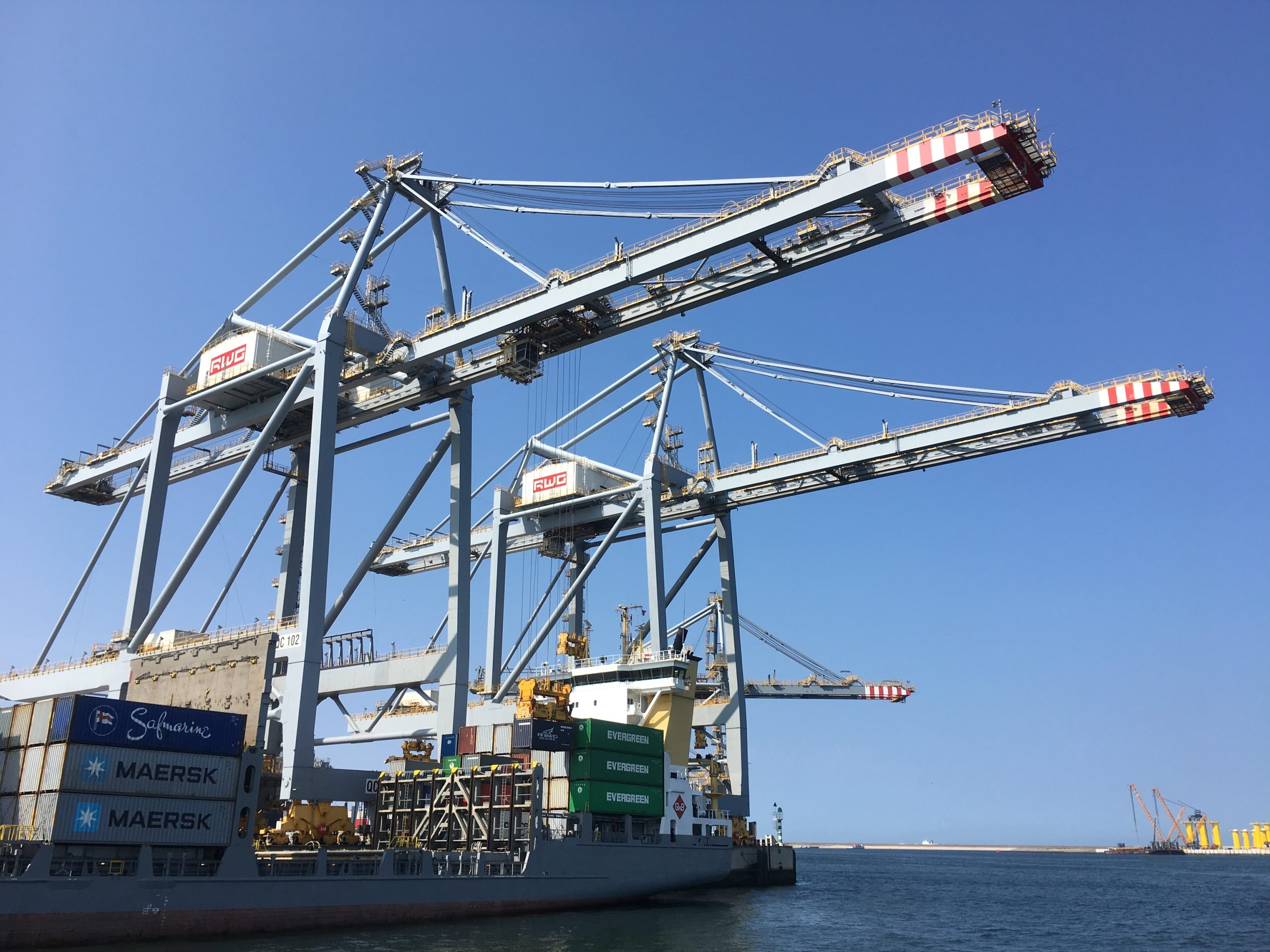
Smart ports – realized through for projects and programmes
Last week the IPMA Insight “Smart Cities” was published, highlighting the role projects, programmes and portfolios play for realization. During a visit of the Port of Rotterdam I was made aware of similar initiatives in the field of ports. The “SmartPort” initiative in Rotterdam [http://smart-port.nl/en/] aspires to develop knowledge together with partners in order to change Rotterdam into the Smartest Port. Thus, SmartPort develops research projects in collaboration with partners: 69 projects are ongoing or completed, 6 Million Euros are invested by SmartPort, 6 Million Euros by partners and 18 Million Euros through the grants attracted.

A “Port Innovation Barometer” highlights opportunities, research results and shows how the innovative climate evolves in the port of Rotterdam. It is based on a large-scale research conducted by the Erasmus University Rotterdam among the companies in the Rotterdam area. The Barometer provides insight into the innovation climate in the Rotterdam port and its surrounding industrial complex. In 2016, the survey was conducted for the first time. Approximately, one third of the companies from the region participated. Questions, among other, were: what drives companies to innovate, what makes companies successful in innovation and when it comes to innovation, what do companies currently invest?
The main conclusions of the first edition of the Barometer are:
- Leading role for Port of Rotterdam Authority – Companies expect an active and stimulating role for the Port of Rotterdam Authority in developing and renewing the digital infrastructure and energy infrastructure in the port.
- Clients drive innovation – Companies believe clients are more important for innovation than start-ups. Companies believe collaboration with clients is important for innovation activities. Cooperation with suppliers is also found to be important. However, companies rarely involve start-ups in their innovation processes.
- Current investments mainly in technical innovation – Companies know that social innovation is more important than technical innovation. Nevertheless, in the short term, investments are more often made within the technical field.
- Current focus is on incremental innovation – Rotterdam is further developed and more active when it comes to incremental innovation (continuously improving products and services) than radical innovation (introducing brand new products and services to the market).
- Success factors of innovation – Success factors of innovation are: entrepreneurial orientation, multi-employability of staff, empowerment of employees, and a decentralized organization structure.
- Digitalization, automation and the energy transition are leading in the strategy of port companies – The port business sector sees two developments in particular as promising and of influence on their long-term strategic decision making: firstly, digitalization and automation, and secondly, the increase in production and use of renewable energy.
- Social innovation is decisive – Non-technological innovation, called social innovation, such as new ways of managing, collaborating and working, is decisive for both the innovation capacity and the business performance of companies in the port.
- Future employees must have intra- and interpersonal skills – Companies believe that in the near future so-called intra- and interpersonal skills are very important to employees: the ‘new port worker’ is self-conscious and entrepreneurial and is focused on cooperation, interaction and communication with others.
Projects and programmes play a decisive role for making the Port of Rotterdam smarter… Four roadmaps covering topics such as ”Smart Logistics”, “Smart Energy & Industry”, “Futureproof Port Infrastructure” and “World Port City” comprise of dozens of projects and programmes. For example, one project is concerned with “Climate Change and inland navigation” [http://smart-port.nl/en/project/klimaatverandering-en-binnenvaart/]. It is mentioned that climate change has an effect on the water levels of inland waterways and the duration of high and low water periods. Thus, an accurate forecasting tool is needed that offers support when making decisions about investments in infrastructure (such as bridges and barrages), the composition of the fleet and choices regarding synchromodality issues (transport by road, rail or water). Because major infrastructural investments are made for periods of at least 50 years, a more accurate forecasting tool is required now to be able to make well-founded decisions and to ensure that the rivers remain available after 2050 for reliable and efficient transport over water. The findings of the research activities will have an impact on asset decisions and are the basis of investment projects and programmes. For example, the knowledge about the development of high water levels as a consequence of climate change helps to predict whether measures are needed. This information is crucial in order to determine how high specific bridges must be placed and if measures such as channeling the river and / or water storage (space for the river) are necessary.

Reinhard Wagner has been active for more than 30 years in the field of project- related leadership, in such diverse sectors as Air Defense, Automotive Engineering, and Machinery, as well as various not-for-profit organizations. As a Certified Projects Director (IPMA Level A), he has proven experience in managing projects, programmes and project portfolios in complex and dynamic contexts. He is also an IPMA Certified Programme and Portfolio Management Consultant, and as such supports senior executives in developing and improving their organizational competence in managing projects. For more than 15 years, he has been actively involved in the development of project, programme and portfolio management standards, for example as Convenor of the ISO 21500 “Guidance on Project Management” and the ISO 21503 “Guidance on Programme Management”. Reinhard Wagner is Past President of IPMA and Chairman of the Council, Honorary Chairman of GPM (the German Project Management Association), as well as Managing Director of Tiba Managementberatung GmbH.
Topics of interest
Most Read
-
 15 June 2018 | 7:26
5Ws 1H: A technique to improve Project Management Efficiencies
-
 29 January 2018 | 8:13
5S (or 6S) Lean Management technique: Possible uses in project management
-
 02 February 2018 | 2:32