
From Presidents to the Future: Leadership Lessons Shaping the Next Decade of Project Management
IPMA Global Project Profession Forum 2026 brought together an extraordinary panel of current and past leaders of the project profession to reflect on decisions, values, and the future direction of project management in an era defined by AI, sustainability, and societal transformation.
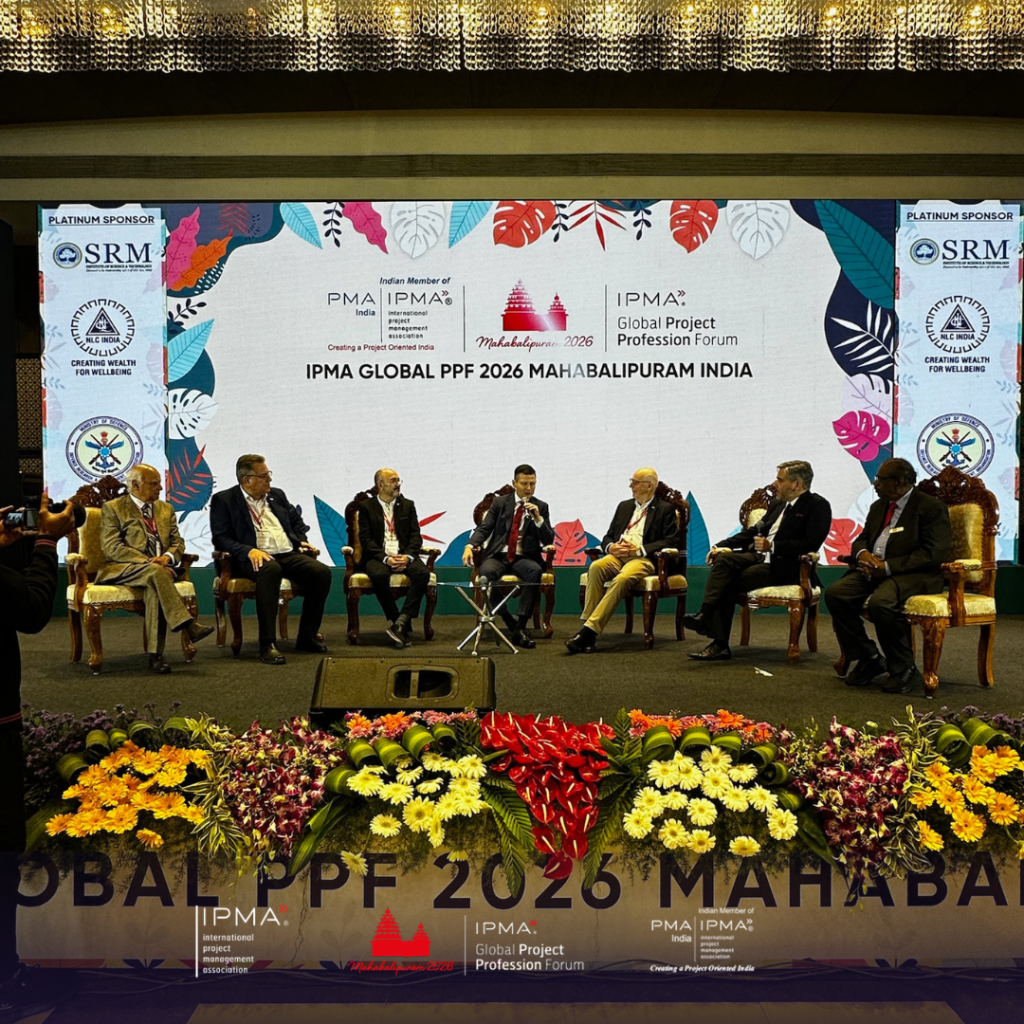
The Presidents Panel gathered:
- Prof Dr Mladen Vukomanović (MV) – President of IPMA
- Dr Jesús Martínez-Almela (JMA) – Former President of IPMA and Honorary Fellow
- Prof Dr Reinhard Wagner (RW) – Former President of IPMA and Honorary Fellow
- Mr Roberto Mori (RM) – Former President of IPMA and Honorary Fellow
- Dr A Sivathanu Pillai – President of PMA India
- Mr Anil Razdan – Patron of PMA India
- Moderated by Mr Vladimir Obradović, Vice President of IPMA
Moderating the discussion, Vladimir Obradović positioned the panel as a strategic dialogue across generations of leadership — a space to share lessons learned, reflect on pivotal decisions, and explore how the profession must evolve to remain relevant and trusted.
Which Presidential Decision Has Become More Valuable Over Time?
The first question invited reflection: Which single decision made during your presidency is even more valuable today than when it was taken?
Roberto Mori reminded the audience that while technologies change, human capabilities remain constant. The enduring strength of project management lies in people.
Reinhard Wagner emphasized the importance of accountability and “walking the talk.” For him, leadership begins with ownership — of projects, organizations, and decisions. Taking responsibility remains one of the most powerful commitments a leader can make.
Jesús Martínez-Almela offered concise yet profound advice: “Manage yourself.” Leadership starts with personal consistency, integrity, and leading by example. Inspiration comes from authenticity.
Mladen Vukomanović reflected on his journey from IPMA Young Crew to IPMA President. He highlighted the power of vision in making projects succeed. While IPMA standards provide structure and guidance, he stressed that sustainability, ethics, and integrity must guide real decision-makers. In his view, IPMA certification represents more than competence — it signals commitment to the greater good over personal interest.
Dr Pillai focused on global interaction — across cultures, countries, and industries. He underlined sustainability and Industry 4.0 as defining contexts of modern projects. With net-zero ambitions shaping future initiatives, projects now carry strategic and societal weight that demands professional execution.
Anil Razdan brought a strong public-sector perspective. He highlighted accountability in managing public investment. Delayed decisions increase costs. Ethical and timely leadership is not optional — it is a responsibility. Discipline and clarity of direction are essential.
What Must the Profession Change in the Next 10 Years?
The second question shifted focus to the future: What shift must the project profession make to remain relevant and trusted by societies?
Mladen Vukomanović stressed that IPMA must remain the voice of the profession globally. Values such as ethics, inclusion, and self-driven leadership — already embedded in IPMA’s strategy — must continue to guide its evolution.
Jesús Martínez-Almela spoke about the emergence of project-oriented societies. Projects are no longer temporary initiatives — they shape economies and communities.
Reinhard Wagner provocatively suggested that traditional project management may evolve significantly due to AI. However, leadership and people competences will remain irreplaceable. Quoting Daniel Defoe, he highlighted common sense, honesty, ingenuity, creativity, and intuition as timeless qualities.
Roberto Mori reinforced the need for ethical leadership, lateral thinking, and creativity as future-proof skills.
Anil Razdan emphasized four qualities that will define future leaders: ethical conduct, objectivity, efficiency, and the courage to decide at the right time. Discipline, he noted, always pays off.
Dr Pillai underlined ethical leadership, people skills, and inclusion as central pillars for the profession’s future. He suggested that project management must increasingly become project leadership.

Conclusion: From Management to Leadership
The Presidents Panel demonstrated that while tools, technologies, and methodologies evolve, the foundation of the project profession remains human-centered.
Across generations of IPMA leadership, a consistent message emerged:
- Ethics is non-negotiable.
- Competence must be demonstrated, not declared.
- Sustainability is a strategic imperative.
- Leadership requires accountability and courage.
- AI may enhance performance, but it cannot replace human judgement.
As projects grow in scale and societal impact — from net-zero initiatives to digital transformation — the profession must evolve from managing tasks to leading change.
The discussion concluded with a shared understanding:
To remain trusted by societies, project management must strengthen its ethical foundations, embrace innovation responsibly, and cultivate leaders capable of balancing competence with integrity.
The future of the profession lies not only in what we deliver — but in how we lead.

Topics of interest
Most Read
-
 15 June 2018 | 7:26
5Ws 1H: A technique to improve Project Management Efficiencies
-
 29 January 2018 | 8:13
5S (or 6S) Lean Management technique: Possible uses in project management
-
 02 February 2018 | 2:32