
Advocating for better project outcomes
In the world of project management, 2019 might be seen as the Year of Sustainability. With more research papers, case studies and events on project sustainability than ever before, sustainability is no longer a marginal interest and, of course, the 31st IPMA World Congress in Yucatan later this year is “Integrating Sustainability to Project Management”.
There are clear tensions between sustainable development and project management. Global heating (a term with more punch than climate change) may be the most pressing issue that is grabbing media headlines, but many projects were already in train before the need for urgent action was widely recognised. Further, acting on greenhouse gas emissions, biodiversity, inequalities or human conflict may seem remote from the immediate priorities to deliver products or change on many projects.
Never-the-less, there have been many initiatives around integrating sustainability into project management, making projects ‘greener’ and identifying the projects required for sustainable development, climate adaptation and mitigation, and achieving the United Nations’ 17 SDGs (Sustainable Development Goals). Sustainability is already at the heart of IPMA’s work with two SIGs concerned with sustainable development. Smart Cities is concerned with “sustainable models for project management in the development of smart cities”, and Smart Rural aims to deliver “an inclusive and sustainable vision of rurality”. No one yet knows how almost 8 billion people can live in harmony on our one planet. All sustainability initiatives, therefore, are to be welcomed, rather than seen as competing, and we must make sure we learn from and with each other.
Shared learning has been driving recent work at Bournemouth University on the concept of Responsible Project Management. Central to the notion of responsibility, is the idea that project managers are well placed to advocate for projects to deliver less damaging and more beneficial outcomes.
Over the past 12 months we have been collaborating with practitioners from a range of industries and functions, and researchers from more than seven universities across Europe, on developing a new concept. A Manifesto for Responsible Project Management is attracting worldwide interest and has more than 20 initial signatories. The team is now identifying case studies that demonstrate how projects can be managed in ways that are beneficial for people, the planet and prosperity.
Responsible Project Management differs from other approaches to sustainable project management by focussing on behaviours and competencies. We chose the term responsible we are keen to draw on the existing body of literature about ‘responsible management’. A perspective on projects as temporary learning organisations was also different to more traditional views. Another departure from other approaches to sustainability was to define sustainability as an outcome, rather than a set of objectives. Being, not doing.
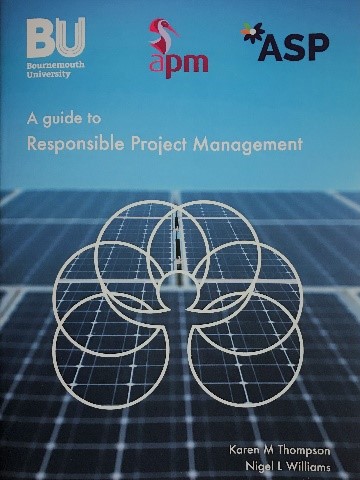
The concept of Responsible Project Management calls for a new type of Project Manager. The logo represents the human dimension of managing projects and juggling the needs of six different groups of stakeholders. An output from the first social learning workshop was a Guide for practitioners and researchers that is available as a free download from www.responsiblepm.com
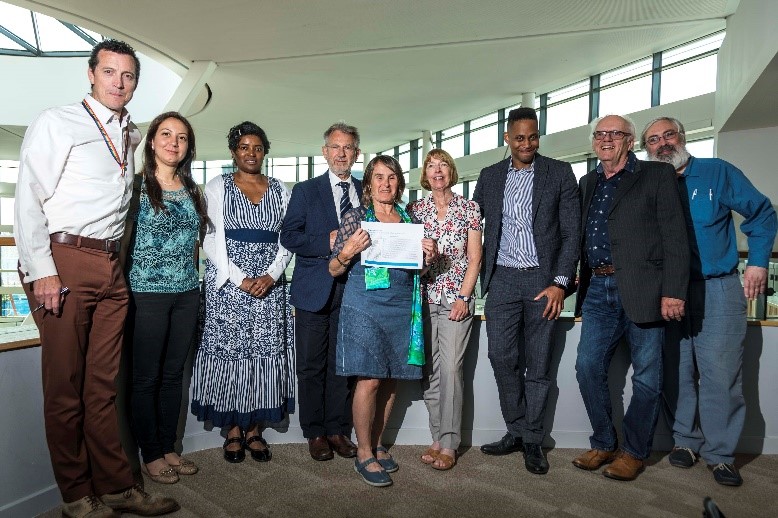
In July 2109, we held a second social learning workshop with the aim of agreeing a call to action in the form of a Manifesto for Responsible Project Management. Feedback on the initial ideas, case studies and further research were used to build the concept. Eight initial principles became ten, and some of the wording was refined. The workshop culminated in a signing ceremony. Initial signatories to the Manifesto included representatives from three professional bodies, seven universities across Europe, small businesses and a large multi-national company.
Project professionals are well placed to act because they are at the heart of projects and programmes that deliver change across the planet. They already have many of the skills needed to facilitate difficult conversations and negotiate innovative solutions. Greater awareness of the medium and long-term consequences of projects is required, should be used to inform decision-making on projects and is needed early enough to have an impact on both what a project delivers and the way it is delivered.
Now is the time to begin having much more difficult conversations about projects. Society urgently needs to challenge the notion that growth is always good; question the priority given to financial return over environmental and societal concerns; and we need to radically re-think how we approach many projects and programmes to ensure that projects deliver beneficial change for prosperity, society and the environment. We believe that Project Professionals can and should rise to this challenge.
You can read some suggestions about the actions project professionals can take here: https://www.majorprojectsknowledgehub.net/2019/07/23/10-action/
The Manifesto has already been translated into Spanish, Italian and French and all versions can be found here: http://responsiblepm.com/translations-of-the-manifesto/
Further details about the work to date on Responsible Project Management, including the Guide and the Manifesto can be found at: www.responsiblepm.com
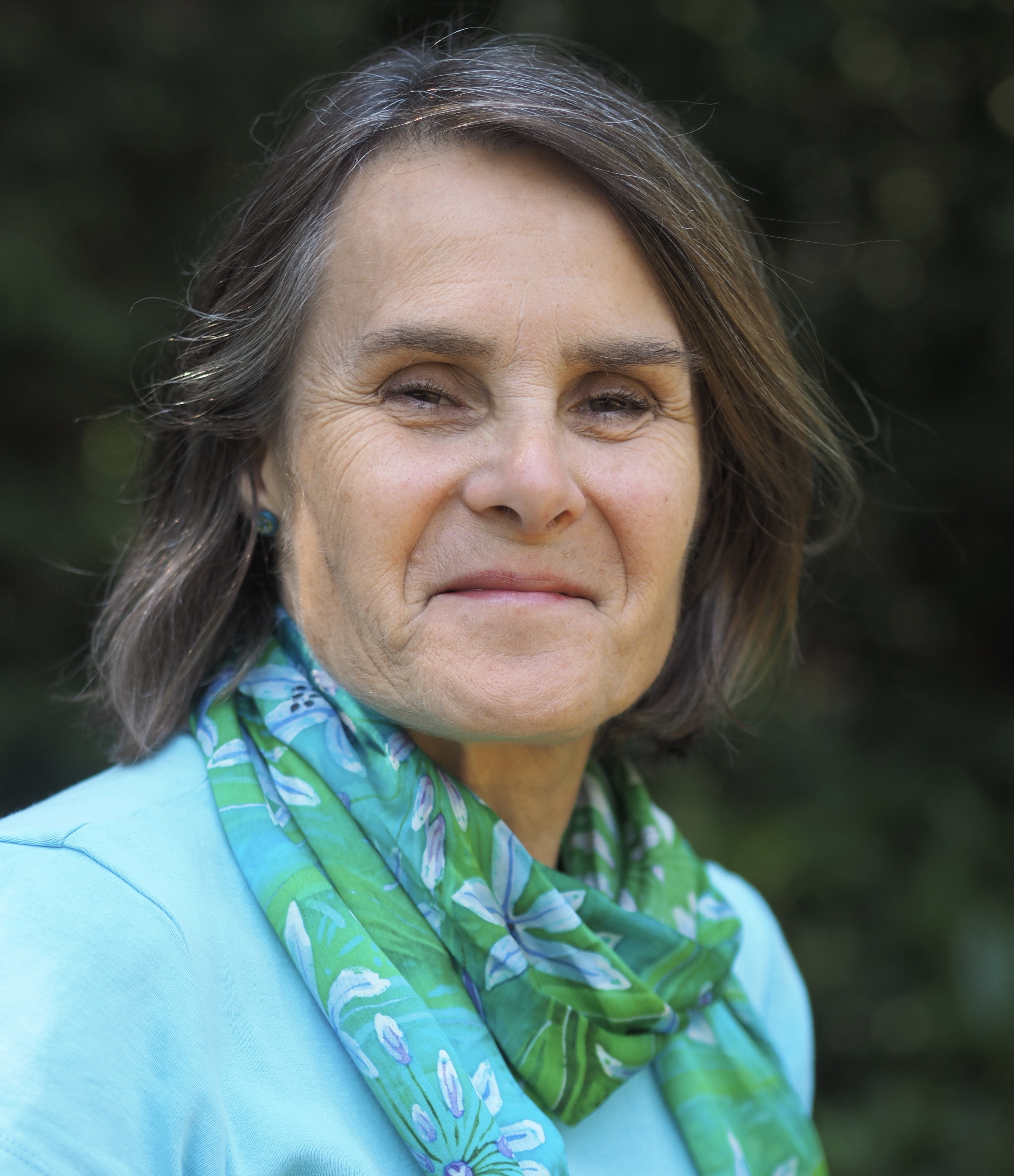 Written by: Karen Thompson
Karen Thompson is a Senior Academic at Bournemouth University and has been active in the field of project management for over 40 years in sectors such as Finance, Local Government, Information Technology and Systems Strategy, as well as non-for-profit organisations. She is passionate about transforming project management practice and education to improve project outcomes. Curiosity about how people learn has inspired her to research at the intersection of project management, organisational learning and sustainable development. Karen is a Fellow of the UK Higher Education Academy, a member of PMI (UK Chapter) and is her university’s representative for the Association for Project Management. She won the APM’s Herbert Walton Award in 2017 for her research on social media in the practice of project management and is a Finalist in the 2019 UK and Ireland Green Gown Awards.
Topics of interest
Most Read
-
 15 June 2018 | 7:26
5Ws 1H: A technique to improve Project Management Efficiencies
-
 29 January 2018 | 8:13
5S (or 6S) Lean Management technique: Possible uses in project management
-
 02 February 2018 | 2:32